Top Tips for Developing an Impactful Website Design That Converts
To attain this, one have to consider a variety of aspects, consisting of understanding the target audience, focusing on customer experience, and enhancing for mobile systems. The calculated usage of engaging call-to-actions and a distinct aesthetic pecking order plays a critical duty in directing customers through their trip.

Understand Your Target Target Market
Recognizing your target audience is fundamental to effective website style, as it prepares for producing an appealing user experience. Determining who your customers are, including their demographics, choices, and habits, allows developers to customize the site's material, design, and performance to fulfill certain needs.
Performing detailed market research study is important in this procedure. Surveys, interviews, and analytics can supply valuable understandings right into user expectations and pain points. By compiling this data, designers can develop individual characters that represent various segments of the target market, making sure that design choices are notified and relevant.
Moreover, recognizing the target audience assists in choosing ideal layout elements such as color pattern, typography, and imagery that reverberate with users. A web site that speaks straight to its target market fosters a feeling of connection and depend on, motivating longer sees and greater conversion prices.
Eventually, a user-centered technique to site design not just boosts customer fulfillment but also sustains service goals by driving interaction and loyalty. By prioritizing the demands and preferences of the target market, an internet site can successfully offer its objective and attain preferred end results.
Prioritize Customer Experience
To enhance the total effectiveness of a web site, focusing on user experience (UX) is crucial (Website Design). A well-designed UX makes sure that site visitors can browse the website easily, locate info swiftly, and engage with content meaningfully. This results in raised individual complete satisfaction and greater conversion rates
Begin by executing intuitive navigating. Menus ought to be rationally structured, enabling individuals to situate key areas of the website with minimal initiative. Consistency in design elements, such as shade schemes and fonts, fosters experience, which is important for keeping individual involvement.
Additionally, think about the filling speed of your site. A hold-up of just a few secs can result in substantial drop-offs, as individuals are less likely to await a slow-loading page. Enhancing images and maximizing code can enhance efficiency and keep visitors.
By focusing on user experience, you not only produce a more delightful setting for site visitors yet additionally reinforce your brand name's integrity. Eventually, a focus on UX is a financial investment in the long-term success of your internet site.
Enhance for Mobile Instruments
Optimizing for mobile tools is crucial in today's electronic landscape, where an increasing number of customers accessibility websites with smartphones and tablet computers. A mobile-friendly layout not only improves user experience however also plays a substantial function in boosting search engine rankings. To accomplish this, it is vital to adopt a receptive design that immediately adapts to numerous display dimensions and alignments.
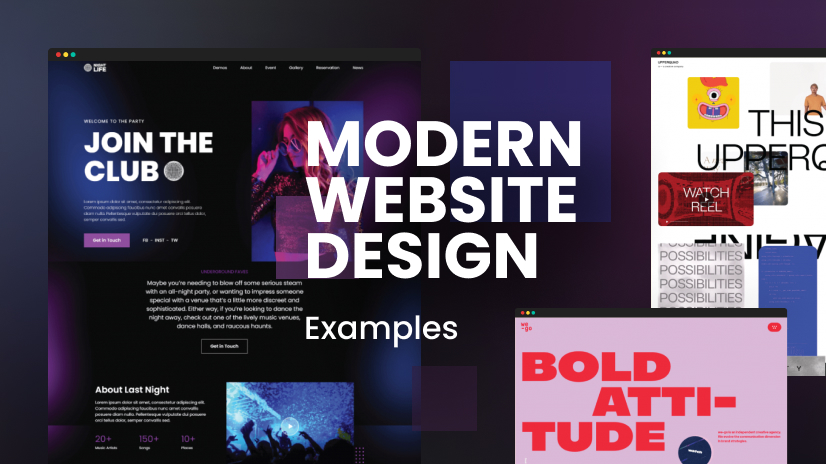
Loading rate is an additional vital factor; mobile customers are usually much less patient and anticipate quick access to details. Enhance photos and utilize internet browser caching like this to enhance efficiency. Examination your site on multiple tools and screen resolutions to determine and remedy any type of potential usability problems. By focusing on mobile optimization, you guarantee that your site stays affordable and effectively engages a broader target market.
Usage Engaging Call-to-Actions
An internet site's effectiveness commonly pivots on its ability to lead site visitors toward wanted activities, making compelling call-to-actions (CTAs) important components of design. CTAs offer as the crucial points that route users to involve with the website, whether that suggests making an acquisition, authorizing up for an e-newsletter, or downloading a resource.
To develop efficient CTAs, quality is extremely important. Use succinct language that clearly communicates the activity you desire the individual to take.
Moreover, the design of CTAs must stick out without being meddlesome. Employ contrasting shades and clear font styles to ensure they record interest. In addition, take into consideration using directional signs, such as arrows or images, to guide customers toward these switches. By concentrating on these aspects, services can significantly enhance individual engagement, driving conversions and eventually achieving their website's goals.
Emphasis on Visual Pecking Order
Reliable web site design relies greatly on a well-structured aesthetic power structure that overviews customers via content effortlessly. By arranging elements in a manner that prioritizes information, developers can improve individual experience and promote decision-making. This includes making use of dimension, color, comparison, and spacing strategically to draw interest to the most critical components of a web page.
The use of bigger font styles for headings and subheadings establishes a clear difference between various sections, enabling customers to check content Check Out Your URL easily. In addition, using contrasting shades for switches and calls-to-action can record individual focus and urge communication. Whitespace is another vital component; it avoids clutter and allows users to focus on vital messages without distractions.
Photos and graphics should complement the text while additionally sticking to the well established power Get More Information structure, strengthening the general message (Website Design). Consistency in layout aspects, such as color pattern and typography, further enhances the aesthetic power structure, making navigating user-friendly
Verdict
In verdict, effective website layout requires a thorough understanding of the target audience, prioritization of user experience, and mobile optimization. Eventually, a well-executed internet site design offers as an essential part in driving user actions and attaining service goals.